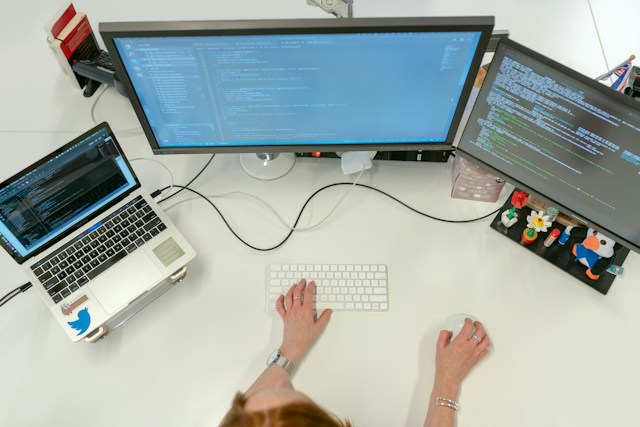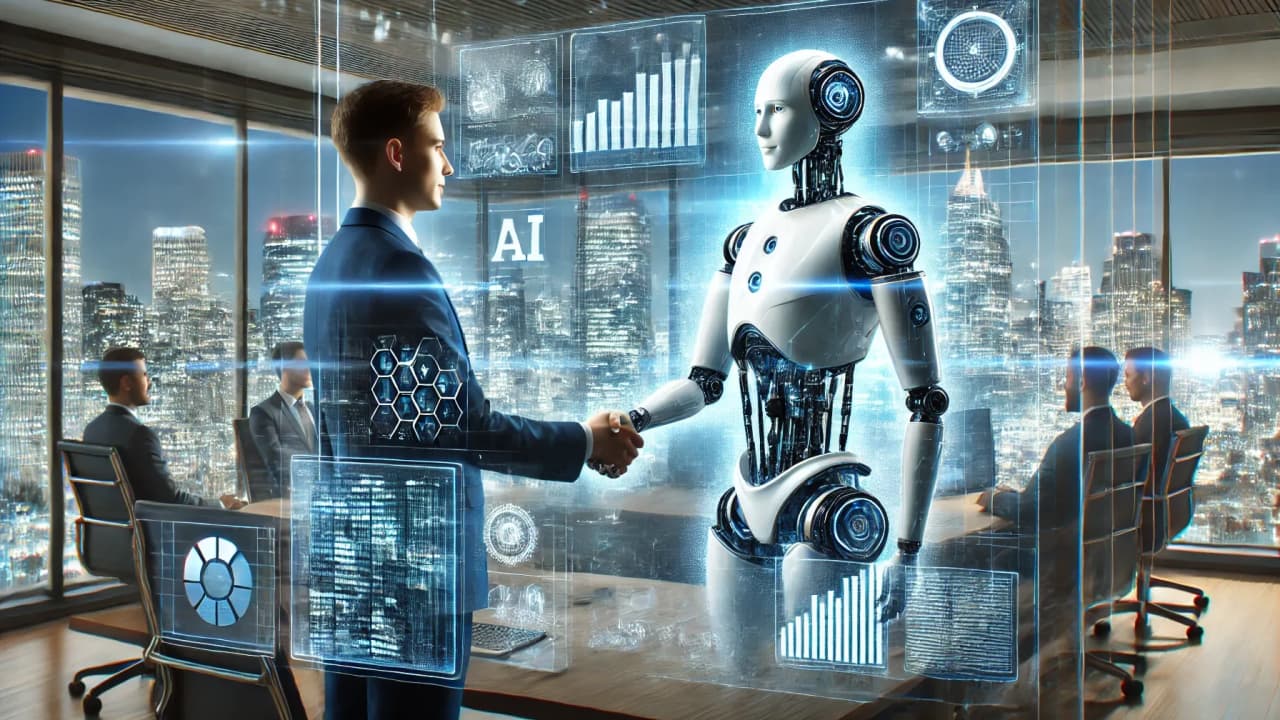
Not long ago, programming was the domain of a select few. Only those who had mastered the syntax of languages like Python, Java, or C++ could build websites, applications, and automated systems. Compilation, debugging, and writing algorithms manually were daunting obstacles for the majority of users. However, the rapid development of artificial intelligence has changed the rules of the game.
Today, traditional code is being replaced by conversation—natural, intuitive, and accessible to everyone. Instead of writing long lines of code, users can simply describe a task in natural language. And the AI will generate a solution: from writing code to automating business processes and designing user interfaces. This isn’t science fiction—it’s the reality of 2025.
Even in daily life, where digital multitasking reigns, these technologies have become assistants for non-technical people. For example, in Slovenia, where residents actively use online platforms for work, leisure, and entertainment—including participating in intellectual games or online casinos—access to AI tools has become especially important. Users can now customize applications to their needs without diving into technical details.
If you’re looking for reliable online casinos with a variety of games from leading global developers, visit slovenskecasino.net. There you’ll find only trustworthy platforms offering a wide range of game options and exciting opportunities for every player. Each user can find a casino with attractive terms and bonus programs that make the gaming experience even more engaging and rewarding.
Artificial Intelligence as the New Bridge Between Idea and Execution
The idea that anyone could “program” without knowing code once seemed utopian. However, modern language models like GPT, Copilot, or Gemini demonstrate remarkable flexibility. They understand context, adapt to prompts, and learn from interactions. For the first time in history, it has become possible to create digital products through conversation.
What does this mean for the average user? Suppose you own a small business in Ljubljana. You need to automate a booking system but don’t have the budget for a developer team. In the past, this challenge could stall your growth. Today, you can simply describe the task: “Create a booking form with email confirmation,” and the AI will generate the necessary code. Moreover, it will suggest how to host it in the cloud, link it to a calendar, and design the interface—all without writing a single line of code yourself.
This approach changes the very philosophy of creating digital solutions. The user no longer needs to adapt to tools—the tools adapt to the user. This lowers the barrier to entry into IT and opens up opportunities for millions around the world, including in Slovenia, where digitalization is rapidly advancing thanks to government initiatives and a high level of internet literacy.
The New Role of Developers: Curators, Architects, Mentors
Of course, this doesn’t mean that developers are no longer needed. On the contrary, their role becomes even more important—just transformed. Instead of routine work on typical modules, developers increasingly act as solution architects. They create abstractions, train models, ensure the security and ethics of digital products, and help users frame their prompts so AI understands them accurately and efficiently.
Thus, professionals become curators of creative processes, linking business goals and technical capabilities. Meanwhile, users gain a sense of control—no longer needing to be engineers to build something new.
This trend is especially visible in educational environments and among young professionals in Slovenia, where more and more students are learning “visual” or “conversational” programming, using AI as a learning partner. This brings innovation closer to everyone—from schoolchildren to retirees.
Democratization of Technology and Challenges of the Future
But with accessibility come challenges. One of them is quality. When anyone can “create,” there’s a risk of oversaturation with low-level digital products. How do we distinguish quality from superficiality? How do we ensure safety when AI is used en masse?
The answer lies in sound infrastructure and digital education. It’s important not just to provide tools, but to teach how to use them responsibly. In Slovenia, steps are already being taken in this direction: digital literacy courses are emerging, a national AI strategy is being developed, and attention to privacy and digital ethics is growing.
There’s also a philosophical question—where is the boundary between human and machine in the creative process? If an app or game was generated by AI based on a user’s description, who is the author? This question will become increasingly relevant in the coming years.
From Possibility to Freedom
Still, despite the challenges, the most significant change is the feeling of freedom. For people not connected to technical professions, entirely new horizons are opening. Want to create a mobile app for your village? Go ahead. Need analytics on café visits? AI is already collecting and visualizing the data. Dreaming of your own blog, music platform, or even a digital assistant? All of this is possible without needing to become an engineer.
It’s a shift from a world where you had to know how to a world where all that matters is knowing what you want. This is the essence of the new programming paradigm.
The Future Is Already Here
The world is changing, and AI is no longer just a supporting tool—it’s becoming the mediator between ideas and their realization. For non-technical users, this is a chance to enter the digital age not as observers, but as active participants.
Slovenia, with its culture of innovation, high level of digital development, and openness to new technologies, has every chance to become one of the leaders in this transformation. The key is not to fear experimentation, to keep learning, and to embrace conversation as the new language of programming. Because now, to “write a program,” all you need to do is start a conversation.
Conclusion: Digital Dialogue as a Path to Equal Opportunities
We are standing at the threshold of a new digital era, where the lines between technical and non-technical are gradually fading. Artificial intelligence has transformed programming from a complex craft into a form of dialogue—accessible, understandable, and intuitive. This opens the door to equal opportunities for everyone—from students and entrepreneurs to creatives and retirees.
For Slovenia, this is especially relevant. A small yet dynamic country with a high level of digital integration and education can become not just a consumer of AI solutions but an active contributor to their development. The use of AI in everyday life—whether in business, education, entertainment, or even online gaming—is becoming not just a trend, but a part of a new culture of interaction with technology.
And in this new world of code-free programming, everyone wins: technology becomes closer, ideas are realized faster, and creativity is no longer limited by technical constraints. The key is learning to articulate your desires. Everything else will be done for you—by artificial intelligence.